












Kitten Run: Anime
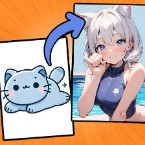
What actually happens when the little cat in Kitten Run: Anime finishes a run and the reward screen opens? That moment is the whole point of the game: you have just dodged your way up a vertical course, collected cards and power-ups on the way, and now one of those cards might reveal a new cat girl for your collection. Everything else, from steering to trading, exists to make that moment happen more often and with rarer cards.
Steering a Cat Up the Vertical Map
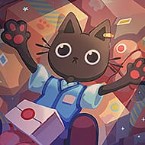
Each run starts with your cat already moving. The course scrolls upward, the cat keeps going on its own, and your only job is to slide left or right so it avoids whatever is thrown into its path. There is no jump, no attack and no brake, which keeps the controls simple and puts all of the challenge into positioning and timing.
Obstacles come from several directions and do not all behave alike. Some sit still and only need a quick step to the side, while others slide across the path and punish anyone who moves too early. Reading which kind is coming is the first real skill Kitten Run: Anime teaches, and it is the difference between a short attempt and a clean one.
Scattered along the course are collectible cards and power-ups. Grabbing them is how a run turns into progress, because these pickups feed the upgrades that transform your cat. The tension between safe steering and greedy collecting gives every run a small decision at almost every step, and the beginner guide walks through that balance for the first sessions.
| Type of play | Vertical runner with a card collection |
|---|---|
| Where it runs | Android and iOS phones and tablets |
| What you do | Steer left and right, collect cards and power-ups |
| Collection tiers | Normal, Rare, Super Rare and Epic cat-girl cards |
| Setting | Short courses on a scrolling vertical map |
| Structure | Numbered levels that grow faster, plus trading |
Touch Controls and Steering Habits
Because the cat runs by itself, every input is about direction. The controls fit in a short list, yet the habits around them decide how far you get on later levels where the obstacles move faster.
- Automatic running: the cat moves up the course without any input.
- Steer left: slide the cat toward the left side of the path.
- Steer right: slide the cat toward the right side of the path.
- Menu taps: open cards, upgrades, trades and level rewards.
Short, controlled moves work far better than big swings. A wide dodge away from one obstacle often carries the cat straight into the next, so experienced players keep the cat near the middle of the path and nudge it only as much as needed. The controls page covers these habits along with playing through an emulator on a computer.
Moving obstacles call for patience. The natural instinct is to dart across as soon as one appears, but waiting a beat until the gap opens is nearly always safer, especially once the speed picks up a few levels in.
The camera in Kitten Run: Anime sits fairly close to the action, which some players find cramped. Playing on a tablet or a larger phone gives a little more warning, and that extra moment of reaction time adds up over a long session.
How a Session Unfolds From Run to Reward
The game has one main mode, and every session follows the same rhythm. You pick a level, run it while dodging and collecting, finish with a score against the timer, and then move to the reward screen where cards change hands.

Levels are the backbone of progress, much as distance is on our runner shelf. Each new stage speeds up the obstacles, so a pattern that felt relaxed early in the game asks for sharper reactions a few stages later. The score you post matters too, because the value of the reward climbs with both the stage number and the final result.
Rewards after a level come in two forms. Sometimes you simply receive a random cat-girl card, and sometimes you get the chance to trade for a better one. That second option links the running half of the game to the collecting half in a very direct way.
Because rewards scale with both stage and score, replaying a level is not wasted time. A cleaner run on a stage you already cleared can pay more than a shaky first attempt on the next one, so alternating between pushing forward and polishing scores is a sound rhythm.
New levels in Kitten Run: Anime can be opened without spending by watching advertisements. Players who play F2P usually group their sessions around this, unlocking a level and then running it several times in a row so each ad feels worth the wait.
Upgrades close the loop. The cards and power-ups gathered during runs level up your cards, and each upgrade reveals more of a cat-girl illustration. That steady reveal is what keeps short sessions feeling purposeful, even when a single run lasts only a minute or two. Watching a plain running cat slowly become a finished cat-girl portrait is the payoff that ties every run, reward and trade together.
Cat-Girl Cards in Kitten Run: Anime
Cards are the heart of the collection and also your playable characters. Right after the tutorial you receive three different cat-girl cards, so your album starts with a small team instead of an empty page, and every later level adds the chance of one more.
There are four rarities: Normal, Rare, Super Rare and Epic. The higher the tier, the more detailed the artwork, and the top cards are the ones collectors talk about most. Each level also caps which rarities it can award, so the rarest illustrations only appear once you push into later stages. The card collection guide breaks down every tier and how upgrades reveal each portrait.
Some cards go beyond static pictures. Certain cat girls have live 2D-style animation, and a few come with their own voice lines and special sound effects, which makes unlocking them feel like meeting a new character rather than adding another image to a folder.
Players tend to fall into two camps here. Completionists want every card in every tier and push levels steadily for access to higher rarities, while art fans focus their upgrades on a handful of favorites to see full transformations sooner. Both approaches work, and the choice mostly depends on how much you enjoy the running itself. Collectors who want more of this pull-and-reveal loop will find bigger rosters on the gacha shelf.
Trading, the Meter and the Scam Button
Trading is the shortcut to cards you have not found in runs yet. A trader shows you a random cat-girl card, you choose cards from your own collection to offer, and a meter on the right side of the screen tells you how the deal looks.
- Look at the card the trader is offering and decide whether it beats what you would give up.
- Add spare cards, starting with dupes and Normal cards.
- Watch the meter move between Bad, Okay and Good.
- Confirm once it reaches Okay or Good, then check what you received.
The twist is that a trade can turn out to be a scam. Even when the meter looked fine, you may end up losing the cards you offered and never receiving the new one. It is the most nerve-racking feature in the whole game, and it turns every offer into a small gamble.
Kitten Run: Anime does include a safety net for exactly this case. Pressing the Scam button lets you reverse a bad trade by watching an advertisement, which returns your cards. Checking your collection right after each deal is the habit that makes this net useful, since you can only undo a scam you actually notice.
Not every offer is worth taking. A trader showing a Normal card you already own is a reason to walk away, while a Super Rare or Epic portrait you have never seen justifies offering several spares.
Careful traders keep a small pool of spare cards purely for deals. Treating those cards as currency rather than collection pieces means a scam never costs a favorite, and the meter becomes a tool for finding the cheapest acceptable offer instead of a source of stress. The trading guide shows how to land on Okay without overpaying.
Getting the Most Out of Ads
Ads work almost like a second currency here. They unlock new levels, they reverse scammed trades through the Scam button, and they stand in front of some of the most valuable rewards, including offers of Epic cards.
Because every ad costs time, it pays to decide in advance what deserves one. Unlocking a level you plan to replay several times is good value, while watching an ad for a small bonus you could earn in an ordinary run usually is not.
Some players have reported an ad finishing without the promised Epic reward appearing. Checking both the collection screen and the trade menu is the first step in that case, since a few cards show up in one place before the other.
Risky trades belong at the end of a session, when you still have time to watch an ad if something goes wrong. Starting a big trade just before closing the app is the most common way to lose a card for good.
The First Hour and the Usual Mistakes
Early in the game everything is about learning the shape of obstacles. The first levels move slowly enough that you can watch how each hazard behaves, and that knowledge pays off later when the same patterns return at a much higher speed.
Once the starter cards are in your album, the next goal is your first upgrade. Spending the pickups from a few runs on one card shows you how transformations work and gives you a clear picture of where all those collected cards and power-ups go.
By the time the trading screen appears after a level, you should have at least a couple of spare cards. Using those for a first trade, rather than a favorite, lets you learn how the meter behaves without risking anything that matters to you.
The hour usually ends with a decision about pacing. Some players keep pushing into new levels for better rarities, others replay comfortable stages for higher scores, and both paths lead to the same goal of a fuller collection.
The most common early mistake is greed on the track. A card placed right beside a sliding obstacle looks like a gift, but it is often bait, and skipping it is better than losing a run that was heading for a strong score.
The second is rushing ahead through Kitten Run: Anime. Jumping into later levels before getting used to the speed leads to messy results, and messy results mean weaker rewards. Spending a few sessions on comfortable stages raises your scores and, with them, the value of every card that drops.
The third is trading too early. Offering starter cards before you know their rarity or before you have any duplicates is a quick way to regret a deal, especially if it turns out to be a scam and you are not in a position to watch an ad to undo it.
Once these basics click, the advanced habits come naturally. Holding the cat near the center, waiting out moving obstacles, picking up only the cards on a safe line and timing trades for moments when the Scam button is an option all become second nature.
Same Name, Different Games
Searching for the title turns up several unrelated cat runners. There is an indie Kitten Run about eating fish to keep a hunger meter above its limit, a Windows and Xbox endless runner built on jumps and double jumps, and an augmented reality cat runner set in the mountains.
None of those have cat-girl cards, a trade meter or transformations. The anime version is a phone and tablet game for Android and iOS, it does not run in a web browser, and modified downloads circulating outside the official stores are best avoided.
The quickest check is the collection screen: four rarities from Normal to Epic and a trader with a Bad, Okay and Good meter mean you have the right game. The platforms and versions page lists every difference in one place.
Where Kitten Run: Anime Divides Players
Ads are the loudest topic in the community. Watching an ad for a level or a trade reversal feels fair to many people, but plenty of players feel that ads also appear too often outside those optional moments, and that interrupts the flow of a session.
The art style is the second debate. Fans enjoy the steady supply of cat-girl illustrations and the cute transformations, while critics argue that many images look machine-generated and lack the hand-drawn charm of other anime collections. Your own view on that will shape how much the collection pulls you in, and players who prefer drawn character art can browse the anime shelf for alternatives.
Smaller complaints come up as well: requests for an offline mode, occasional lag on weaker phones, Epic rewards that did not arrive after an ad, and cards that appear in the trade menu but not in the collection screen. None of these break the game, but they are worth knowing before you start.

Casual players who just want a few minutes of dodging and a new picture to unlock usually find the trade-offs acceptable. Collectors who chase every Epic card need more patience, since the top tier asks for both progress and luck.
Collectors are still the core audience. If the idea of filling an album with illustrated cat girls, sorted from Normal to Epic, sounds appealing, the steady flow of rewards will keep you coming back for one more level.
Players who enjoy reflex challenges will find the later levels the most satisfying part, since the speed increase turns simple steering into a genuine test of focus and calm. The early stages feel gentle, but the pace eventually demands real attention.
Short-session players fit well too. A run lasts only a minute or two, so the runner slots neatly into a bus ride or a coffee break, and every session still ends with progress on a card.
Anyone who dislikes ads or wants hand-drawn art may prefer something else, and that is worth saying plainly. For those players, the catalog on this site offers alternatives with a similar playful mood, covered in the section below.
Runners, Cat Games and Anime Picks to Try Next
Since the cat runner itself lives on phones, this site pairs its guides with a catalog of similar games. The full list of similar games groups them by what they share with the cat runner: dodging, cats or collectible characters.
For pure steering, Slope is the closest match. A ball races down an endless track, you dodge red blocks with left and right only, and the speed keeps climbing the longer you survive.
Crossy Road swaps sliding for hopping across roads, rivers and train tracks. Its prize machine full of collectible characters feels a lot like waiting for a new card after a level.
Cat fans should try Little Kitty, Big City, a gentle adventure about a kitten climbing back home through a neighborhood full of fish, hats and lost ducklings. Like the runner, it grows your cat's abilities step by step, only through stamina from fish instead of card upgrades.
A different kind of cat challenge waits in Trap the Cat. Instead of guiding a cat past obstacles, you place the obstacles yourself and try to surround a cat before it reaches the edge of a grid.
Cat Mail Co is the cozy option, putting a team of cats in charge of an island post office where parcels are weighed, stamped and shipped with no timers at all. Up to four friends can share the work, which makes it a relaxed evening game.
Zenless Zone Zero brings the cat-girl theme into fast action. Nekomata, one of its agents, fights with quick slashes and a cheeky attitude inside a large collectible cast.
Timing a dodge is close to timing a beat, which is why Muse Dash suits runner fans. Three musician girls run forward and strike enemies in time with the music, using just two keys.
Collectors who want a musical twist can try Project Sekai, where character cards boost your score on Vocaloid songs and new cards arrive with every event. Cards raise scores rather than difficulty, so the songs stay fair for everyone.
For calmer sessions, the casual shelf gathers cat puzzles, cozy islands and physics picks that suit short breaks. Most rounds there last a few minutes, much like a single run up the vertical map.
Players who enjoy the timing side more than the collecting can head to the rhythm shelf instead, where drum charts and one-button songs test the same reflexes. Starting on an easy chart and working upward mirrors the way levels speed up in the cat runner.
Questions Players Ask

Can you play the game in a web browser?
No, it is a mobile game for Android and iOS phones and tablets. Some players use an Android emulator on a computer for a bigger screen, but the game itself is built for touch steering on mobile devices.
How do you get Epic cat-girl cards without spending?
Push into later levels, since each stage caps the rarities it can award, and post strong scores to raise the value of rewards. Trading spare cards for a better offer is the second route, as long as you watch the meter and check for scams afterwards.
What does the Scam button do in trading?
If a trade turns out to be a scam and you lose your offered cards, the Scam button reverses the deal after you watch an advertisement. It only helps if you notice the problem, so check your collection right after every trade.
Why is a card missing from my collection?
Some players have seen cards appear in the trade menu but not on the collection screen. Check both menus and restart the app before assuming the card is lost, especially right after an ad reward.
Kitten Run: Anime packs a simple left-and-right runner, four tiers of cat-girl cards and a risky trading meter into short sessions that always end with something new to unlock. Steer calmly, push your scores level by level and keep the Scam button in mind, and your collection will keep growing toward those Epic illustrations.